

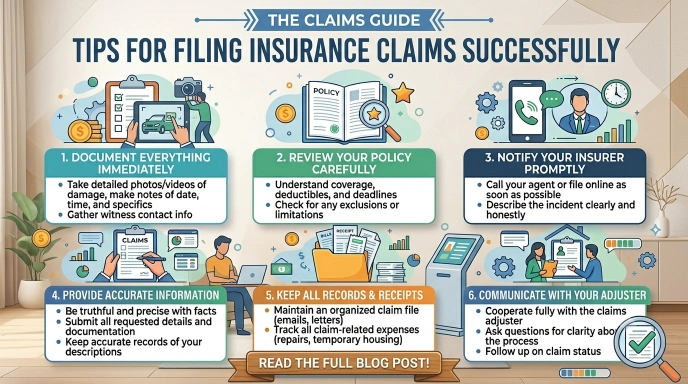
Insurance is designed to provide financial protection in the event of unexpected events, but receiving compensation often depends on filing a claim correctly. Whether dealing with auto accidents, property damage, medical expenses, or other covered losses, understanding the claims process can significantly improve outcomes. Following practical tips for filing insurance claims successfully can help reduce delays, avoid disputes, and maximize the likelihood of a smooth resolution.

Understand Your Insurance Policy
Before filing a claim, review your insurance policy carefully.
Pay close attention to:
- Coverage limits
- Deductibles
- Exclusions
- Reporting deadlines
- Documentation requirements
Understanding your policy helps determine whether the event is covered and what compensation may be available.
Report the Incident Promptly
Most insurance companies require claims to be reported within a specific timeframe.
Delaying notification may:
- Slow claim processing
- Complicate investigations
- Risk claim denial
Contact your insurance provider as soon as possible after the incident occurs.
Document Everything
Proper documentation is one of the most important factors in a successful claim.
Collect evidence such as:
- Photographs
- Videos
- Receipts
- Medical records
- Police reports
- Witness statements
Detailed documentation strengthens your case and helps verify losses.
Keep Accurate Records
Maintain organized records of all claim-related communications.
Include:
- Claim numbers
- Emails
- Letters
- Phone call summaries
- Names of representatives
Accurate records can help resolve misunderstandings and provide proof if disputes arise.
Be Honest and Accurate
Always provide truthful and accurate information when filing a claim.
Avoid:
- Exaggerating losses
- Omitting relevant details
- Providing misleading information
Inaccuracies may result in delays, claim denial, or potential legal consequences.
Take Immediate Steps to Prevent Further Damage
Many insurance policies require policyholders to take reasonable measures to limit additional damage after an incident.
Examples include:
- Covering a damaged roof
- Shutting off water after a leak
- Securing damaged property
Failure to mitigate losses may affect claim eligibility.
Understand the Claims Process
Insurance claims often involve several stages:
- Incident reporting
- Documentation submission
- Investigation
- Damage assessment
- Settlement determination
- Payment processing
Understanding these steps can help set realistic expectations and reduce frustration.
Cooperate with Insurance Adjusters
Insurance adjusters evaluate claims and determine compensation amounts.
To facilitate the process:
- Provide requested documents promptly
- Answer questions clearly
- Attend inspections when necessary
- Keep communication professional
Cooperation often helps claims move forward more efficiently.
Review Settlement Offers Carefully
Before accepting a settlement, carefully review all details.
Consider:
- Repair estimates
- Medical expenses
- Replacement costs
- Future expenses related to the loss
If you believe the offer is inadequate, discuss concerns with the insurer and provide supporting evidence.
Avoid Common Claim Mistakes
Several mistakes can complicate the claims process.
Common errors include:
- Waiting too long to file
- Failing to document damages
- Discarding damaged items prematurely
- Missing deadlines
- Not reading policy terms
Avoiding these mistakes can improve the likelihood of a successful claim.
Seek Professional Assistance When Necessary
Complex claims may benefit from professional guidance.
Depending on the situation, assistance may come from:
- Public adjusters
- Attorneys
- Contractors
- Financial advisors
Professional support can help ensure fair treatment and accurate claim valuation.
Stay Patient but Persistent
Some claims require extensive review and investigation.
During the process:
- Follow up regularly
- Respond promptly to requests
- Maintain detailed records
- Remain professional
Persistence often helps keep claims moving toward resolution.
Conclusion
Successfully navigating the insurance claims process requires preparation, organization, and attention to detail. By understanding policy terms, thoroughly documenting losses, reporting incidents promptly, and maintaining clear communication, policyholders can improve their chances of receiving fair compensation. These tips for filing insurance claims successfully can help reduce stress and ensure that insurance protection works as intended when it is needed most.








Leave a Reply